
The Football Trips blog
A History of Madrid: A Traveller’s Guide to the City
Understand Madrid through the turning points, communities and places that shaped it, with historical context you can explore during a city break.
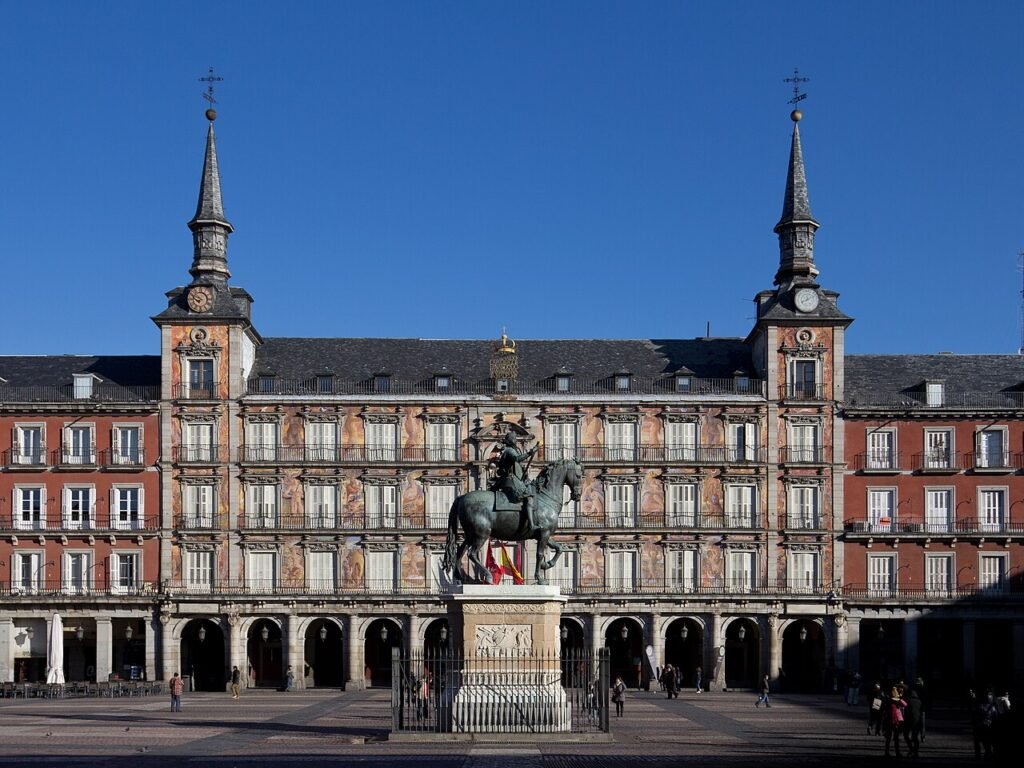
Madrid’s history is not the story of an ancient Roman capital gradually becoming a modern metropolis. Its documented beginnings lie in a medieval Islamic frontier settlement, followed by a much later transformation into the seat of a royal court. That distinction helps explain the city you see today: older lanes beside monumental palaces, formal cultural avenues alongside neighbourhoods associated with political change, and public squares that have served many different purposes.
This introduction connects a few important periods with places you can explore. Our Madrid city guide covers the practical side of a visit; the history below explains why some of its most familiar areas took the forms they did.
Mayrit and the medieval frontier
Madrid’s official tourism history places its first documented phase in the ninth century, when Emir Muhammad I established a fortress at Mayrit. The location near the Manzanares belonged to a wider strategic landscape rather than the capital city familiar to modern visitors. Remaining traces near the old centre offer a reminder that Madrid’s origins extend beyond the royal monuments dominating many sightseeing routes.
Very little of that early settlement survives intact above ground. That makes interpretation especially important: a fragment of wall can carry more historical meaning than its size suggests. Avoid trying to imagine a complete medieval town from one isolated remain. Instead, use it to understand the relationship between defence, water and settlement, then notice how much later development has changed the surrounding landscape.
From frontier town to royal centre
The arrival of the royal court under Philip II in 1561 was a decisive turning point. A town with medieval roots became the centre of a much larger political system, attracting the people, services and buildings needed around a court. Government, household organisation and commercial activity reshaped its possibilities. Madrid’s rise was therefore strongly connected to decisions about political power rather than simply the gradual growth of a major port or industrial centre.
Walking the older streets west of Puerta del Sol, consider what it meant to accommodate that change within an existing town. Lanes, religious buildings, houses and public spaces had to serve new demands. The result was not one perfectly planned capital appearing all at once. It was an evolving city in which royal ambition and everyday life occupied the same limited and frequently complicated urban space.
Plaza Mayor as a stage for the city
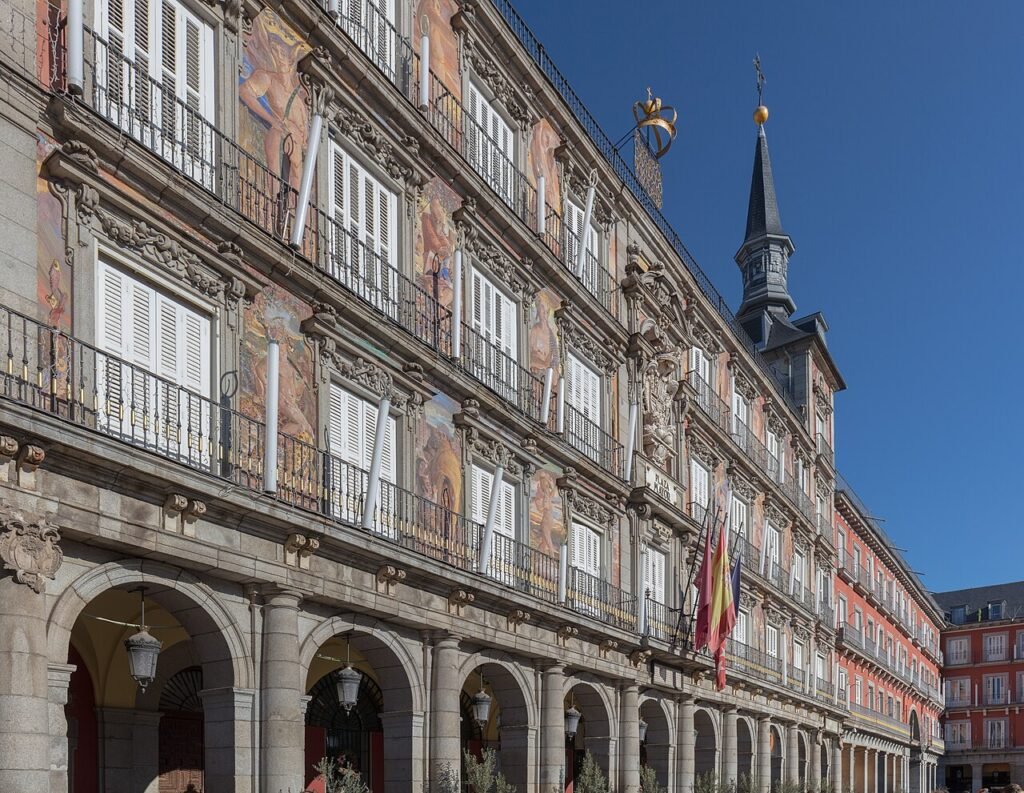
Work beginning in 1617 gave Plaza Mayor its great seventeenth-century form. Madrid’s municipal heritage material shows how the square developed through changing uses and later rebuilding. It served commerce, ceremonies and public spectacle, making it more than an attractive architectural composition. A central square can reveal what a city chooses to gather around and which authorities control the terms of that gathering.
Today, walk beneath the arcades and look at the relationship between the enclosed space and the smaller streets leading into it. The square’s apparent unity can hide a long process of alteration. Rather than treating it as an untouched historical set, consider how fire, restoration and changing civic needs have shaped what survives. Its continued use is part of the history, not an interruption of it.
Try leaving the square through one entrance and returning through another. The change between a contained monumental space and the smaller streets outside helps explain its theatrical effect more clearly than a photograph taken from the middle. Also notice where people sit, pass through or stop to watch others. Present-day behaviour cannot tell you exactly how the square worked centuries ago, but it can make the importance of access, visibility and controlled space easier to understand. Public architecture is experienced through movement as well as through its façades.
The Bourbons and a different monumental capital
The Bourbon period brought another set of ambitions to Madrid. The old Alcázar burned in 1734, and the Royal Palace that visitors recognise today followed on the site. Its scale and setting speak about the representation of monarchy as well as the practical accommodation of a royal household. The official palace history helps distinguish successive buildings and rulers rather than collapsing them into one timeless royal past.
Compare the palace area with the older lanes and with the more formal spaces farther east. Different parts of Madrid express different ideas about what a capital should look like. Broad approaches, controlled views and prominent institutions create a different experience from a dense medieval street network. You do not need to know every architectural name to recognise that shift in scale and intention as you walk.
Art collections become public institutions
The Prado opened to the public in November 1819 as a royal museum of paintings and sculpture. Its own history traces the movement from royal collections towards the institution known today. This is a useful reminder that museums are historical creations too: somebody decides which objects should be collected, how they should be displayed and who is invited to see them.
A Prado visit can therefore work on two levels. You can enjoy individual paintings while also thinking about the history of the collection and the building around them. Choose a few works rather than attempting to absorb every gallery. The museum’s place in Madrid’s cultural landscape matters as much as a list of masterpieces, especially when you connect the visit with a walk along the surrounding avenues and public spaces.
Conflict, memory and the modern city
The uprising of 2 May 1808 is one of the events through which Madrid remembers conflict and resistance. Later, the Spanish Civil War and dictatorship profoundly affected the city and its people. These histories should not be reduced to dramatic scenery for a walking route. They involve loss, contested memories and experiences that cannot be explained by a single monument or a quick summary beside a famous square.
Seek museum interpretation and clearly identified historical sources when you want to explore those subjects in depth. Notice the difference between a place where an event happened, a later memorial and a modern account of what it meant. Those are related but distinct forms of evidence. Madrid becomes more understandable when the visitor allows its difficult twentieth-century history to sit alongside the royal and artistic narratives.
Democracy, culture and neighbourhood change
The transition after Franco’s death opened a new chapter in Spain’s public and cultural life. In the early 1980s, Malasaña became strongly associated with the movida madrileña, a creative movement that changed Madrid’s image. Music, nightlife and experimentation provided visible expressions of a society exploring new possibilities. The official tourism history presents this as an important part of the city’s modern identity.
A walk through Malasaña should not assume that every bar or shop is an unchanged remnant of that period. Neighbourhoods continue to evolve, and present-day life is not simply a performance of a celebrated past. For wider Spanish travel context in Swedish, Spanien-guiden.se can complement your reading. Keep the specific historical questions grounded in museums, archives and the evidence attached to the places you visit.
Football and a history you can explore on foot
Football adds another layer to Madrid’s international identity. Our Real Madrid travel guide and Atlético Madrid travel guide connect the city’s two major club visits with practical planning. Sporting history belongs to supporters and neighbourhood experience as well as famous results. A matchday journey offers a view of contemporary Madrid that a palace or museum itinerary alone cannot provide.
For a short history-focused visit, begin near the early settlement and palace, continue through the older centre to Plaza Mayor and leave another half-day for the Prado area. Add neighbourhood time rather than forcing every period into one walk. Madrid’s story is not a straight line from fortress to fashionable capital. It is a changing relationship between political power, public space, culture and the people who make the city their home.