
The Football Trips blog
A History of Manchester: A Traveller’s Guide to the City
Understand Manchester through the turning points, communities and places that shaped it, with historical context you can explore during a city break.
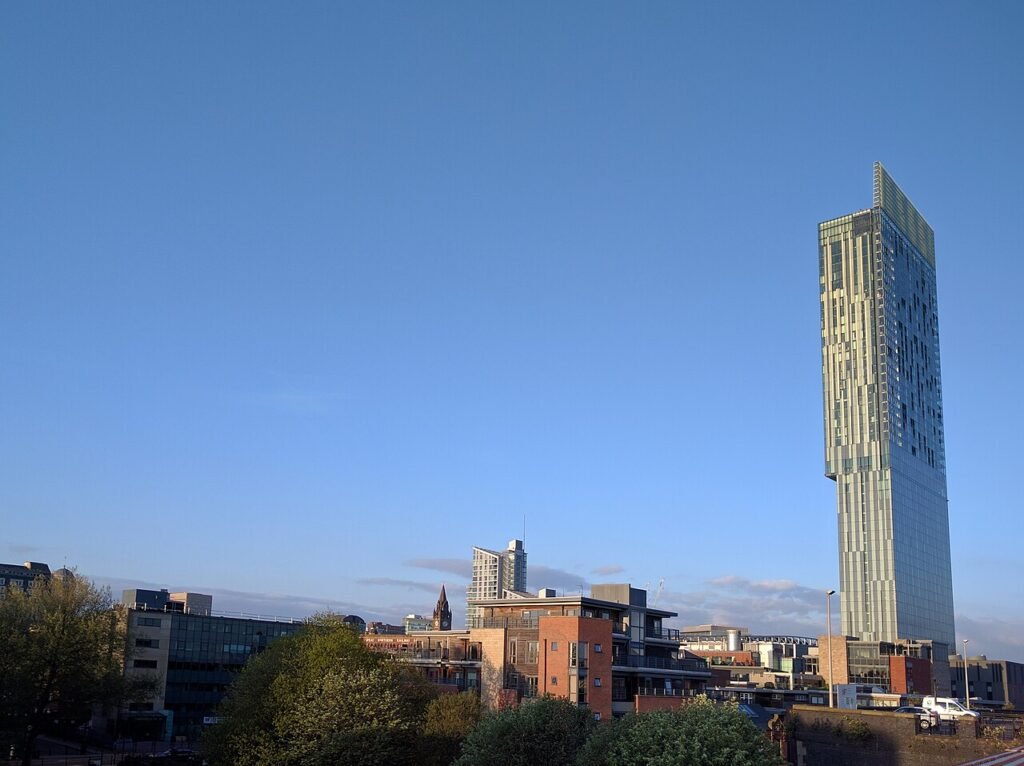
Manchester’s history is often introduced with the word industry, but the city’s story is larger than machinery and mills. It includes Roman strategy, global trade, political protest, scientific ambition, music and the everyday lives of people who worked and settled here. Those themes remain visible in the relationship between warehouses, canals, railway structures and the newer buildings around them. A visitor can read much of that history by looking carefully at how different parts of the centre connect.
This article follows the main threads rather than listing every date. Pair it with our Manchester city guide to organise a visit that includes both the familiar sights and the streets in between.
Castlefield before the industrial city
Manchester City Council traces the Roman fort of Mamucium at Castlefield to 79 CE. Its position near the Irwell and Medlock had strategic value, connecting the site to movement through the wider region. The reconstructed and interpreted remains help visitors see that Manchester’s history did not begin when factories arrived. Yet the Roman fort should not be treated as a miniature version of the modern city waiting to emerge.
Castlefield is particularly useful because several historical periods occupy the same landscape. A short walk can place Roman remains near canals, railway viaducts and converted industrial buildings. Look for differences in level, materials and scale. Instead of expecting one continuous old town, notice how later infrastructure reused or crossed an earlier setting. The result is a concentrated lesson in the way a city accumulates functions over time.
Cotton connected Manchester to the world
The growth of textile production transformed Manchester and the surrounding towns. Mills required workers, machinery, fuel, transport and commercial systems capable of moving raw materials and finished cloth. Warehouses and business buildings were part of that network, not secondary scenery around the factories. The city’s importance depended on connections extending far beyond its own streets.
Those connections included the exploitation of enslaved people producing cotton across the Atlantic. The Science and Industry Museum’s work on Manchester, cotton and slavery makes clear that industrial innovation cannot be separated from the conditions that supplied its raw material. A complete account therefore needs both technological change and the unequal human relationships behind it. Celebrating inventiveness without examining the wider system leaves the most important parts of the story disconnected.
Industrial wealth and everyday experience
Look at an old warehouse and ask what had to happen for it to function. Goods needed space, records, labour and reliable movement through the city. The architecture speaks about commerce, but it does not automatically describe the lives of everyone whose work sustained it. Grand civic or commercial buildings can stand close to places where overcrowding, insecurity and difficult working conditions shaped ordinary life.
Neighbourhood walks help bring those different scales together. In areas such as Ancoats, surviving industrial buildings and later conversions reveal how land and structures acquire new uses. Contemporary cafés and apartments do not erase the earlier functions, but they can make them less obvious. Read available interpretation and pay attention to the relationship between large production buildings and the surrounding streets. History becomes more meaningful when people and infrastructure remain in the same picture.
Peterloo and the demand for representation
On 16 August 1819, a large gathering demanding political reform at St Peter’s Field was attacked by cavalry. The event became known as the Peterloo Massacre. The People’s History Museum and the National Archives provide accounts that place it within the struggle over representation and political rights. The violence cannot be understood simply as an isolated disturbance detached from the conditions and restrictions people were protesting against.
For a traveller, the memorial and the surrounding area invite a different kind of stop from a conventional attraction. Give yourself time to read and think rather than treating the location as another photograph. Manchester’s history includes arguments about who should have a voice and how power responds to public pressure. That political dimension belongs alongside the familiar story of commercial success and industrial achievement.
The railway made new connections
The Liverpool and Manchester Railway opened in 1830, linking the port and the industrial region in a new way. The Science and Industry Museum occupies the former Liverpool Road station site, where the railway’s physical remains make the story tangible. Transporting goods and passengers involved more than laying rails: it required timetables, stations, working practices and a different understanding of coordinated movement.
Consider how that changed the experience of distance. Journeys became part of a scheduled system connecting production, commerce and people. The railway also makes a useful corrective to the habit of telling Liverpool and Manchester only as rivals. Their development was intertwined. Our history of Liverpool explores the port end of that relationship, including the docks and global networks that supplied and served the inland city.
A station is also a meeting point between public experience and hidden systems. Passengers see a platform and a timetable; goods movement depends on storage, handling and onward connections that may be less visible. At Liverpool Road, consider how those functions sat together within a developing industrial city. Even where access to a particular building is limited, the setting can help you ask useful questions. Which direction did goods arrive from, where did people enter, and how did the site connect with the surrounding streets?
Knowledge, institutions and civic confidence
Manchester’s public buildings and cultural institutions reveal the ambitions of a city seeking to understand and represent itself. Libraries, museums and places of learning can be read as part of that history. Their collections and architecture reflect decisions about what knowledge should be preserved, who should have access and how a major city presents its achievements.
When you enter a historic reading room or gallery, take a moment to look beyond the most photogenic view. Ask who commissioned the building, what its original purpose was and how that purpose has changed. Scientific and cultural history is not a separate decorative chapter added after industry. It developed through the same urban networks of wealth, work, education and debate, sometimes reinforcing existing power and sometimes challenging it.
Music, football and shared identity
Manchester’s later cultural reputation reaches far beyond manufacturing. Music scenes, clubs, audiences and independent businesses helped shape the image of a city with a strong sense of itself. It is useful to distinguish the fame of particular performers from the broader environment that supported them. Venues change, buildings acquire new functions and a celebrated address may not offer the same experience it once did.
Football provides another powerful form of collective memory. Our Manchester United travel guide connects a club visit with practical matchday planning. The wider football story includes both major clubs, supporters across the region and communities whose lives extend well beyond sport. A stadium museum can explain trophies and personalities, while the journey to the ground reveals how football fits into the urban landscape and the routines of a matchday crowd.
A changing skyline and an unfinished story
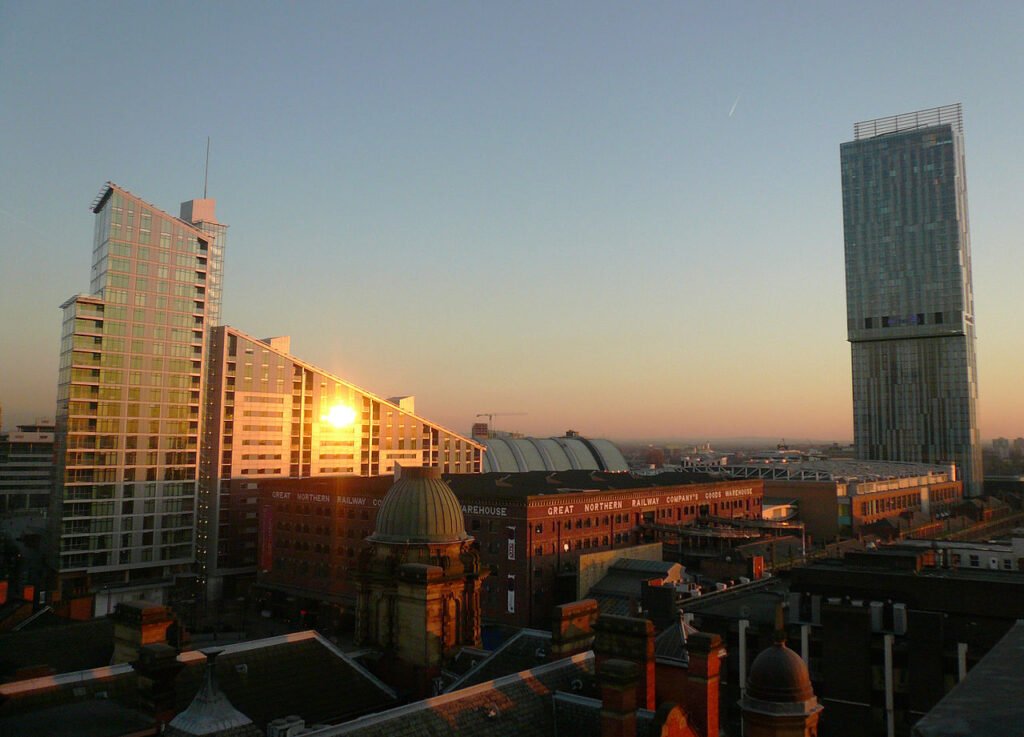
The contrast between former industrial structures and contemporary towers is part of Manchester’s current identity. Redevelopment can preserve buildings while changing who uses them, what they cost and how the surrounding streets function. Those changes deserve attention rather than an automatic description as either progress or loss. Different people can experience the same transformation in very different ways.
For a weekend history route, combine Castlefield with a museum, a political-history stop and time in a neighbourhood such as Ancoats. Keep the plan small enough to notice details. Manchester is best understood through connections: cotton and shipping, industry and labour, railways and time, culture and community. Its past becomes easier to see when the impressive building, the practical transport route and the people who used them are considered together.