
The Football Trips blog
Arsenal in the 1970s: The Double, Rebuilding and Wembley Drama
Explore Arsenal in the 1970s: the teams, turning points and football heritage that shaped the club, with context for a visit to north London.
Arsenal’s 1970s contain two very different kinds of triumph. The league and FA Cup Double of 1971 rewarded the sustained work of a coherent team, while the closing minutes of the 1979 FA Cup final produced a concentrated burst of football drama. Between them lay change, disappointment and the difficulty of turning a celebrated achievement into another successful cycle. It is a decade that makes more sense as a developing story than as a pair of famous photographs.
For supporters visiting north London, these years explain many of the names and memories associated with Highbury. Our Arsenal travel guide provides the practical starting point for exploring that heritage, whether your own first memories are of Bertie Mee’s side or of a much later team.
The decade began with a European recovery
Arsenal’s 1970 Inter-Cities Fairs Cup victory provided an important opening chapter. Having lost the first leg of the final 3–1 to Anderlecht, they won the return 3–0 at Highbury to take the trophy 4–3 on aggregate. Jon Sammels scored the decisive goal in the second match. The comeback gave the home crowd a major success and established a powerful memory before the Double-winning season had begun.
The name of the competition matters. Calling it a modern Europa League triumph would flatten a distinct historical tournament into something it was not. A club’s European record is easier to understand when different competitions retain their own identities. The 1970 success belongs on its own terms, while also helping explain the confidence and belief surrounding the Arsenal side that followed.
A team built for a sustained challenge
Bertie Mee’s Arsenal combined players whose contributions were not all expressed through the same sort of headline. Frank McLintock’s leadership, the work of the midfield and the different attacking qualities of players such as John Radford, Ray Kennedy and Charlie George formed parts of a collective achievement. The Double was not simply the result of one exceptional scorer or a single inspired managerial decision.
Looking at the team this way helps avoid the distortions of a highlight reel. A long season requires repeated performances, recovery from difficult afternoons and a balance between individual initiative and shared responsibilities. The famous goals are easier to remember than the ordinary matches that made them decisive. To understand 1971, keep the accumulated work in view alongside the final week’s celebrations.
The title was secured at White Hart Lane
Arsenal clinched the First Division championship at Tottenham’s White Hart Lane on 3 May 1971. Kennedy’s late header supplied the winning goal. The setting gave the achievement a particular place in north London football memory: a championship completed at the ground of a local rival is bound to be retold differently from one decided far from the city.
That significance should not obscure the wider campaign. The title belonged to the points earned throughout the season, not only to the emotional intensity of its conclusion. For a modern reader, it is useful to separate the historical fact from the mythology that grows around it. The match was decisive and memorable, but the team’s achievement was already the product of many months of work.
Wembley completed the Double
Five days later, Arsenal beat Liverpool 2–1 after extra time in the FA Cup final. Eddie Kelly and Charlie George scored as Arsenal recovered from falling behind. George’s winning goal and his celebration on the Wembley turf became defining images of the club’s history. League consistency and a successful cup run had been brought together within the same season.
The word Double can make the accomplishment sound like a neat label applied after the event. In practice, the two competitions created different demands, with the final requiring another performance after the title had already been secured. Holding those challenges together is part of what makes the season important. It was not only a league-winning team enjoying an additional ceremony; it still had to win another football match.
The years after 1971 were not a simple continuation
Compare the two forms of work contained in that Double. The league required a repeated response to different opponents over a long campaign; the cup eventually required the team to solve a particular final after falling behind. A museum display can place the trophies next to one another, but a fixture list makes the distinction clearer. Look at when matches were played and how different competitions overlapped. That exercise restores some of the physical and organisational demands hidden by the neatness of a season label, without needing to invent private conversations or claim access to the players’ thoughts.
Success creates expectations faster than a team can always renew itself. Arsenal returned to the FA Cup final in 1972 but lost to Leeds United, a reminder that reaching a major occasion does not guarantee the ending supporters want. Over the following years, personnel and circumstances changed. The Double-winning side should not be imagined as an unchanged unit operating throughout the entire decade.
This is one of the most useful lessons of the period. A club can possess a strong identity and a recent great achievement without having a ready-made route to the next one. Rebuilding involves choices about players, leadership and the way the team functions. When retrospective accounts move straight from 1971 to 1979, they risk erasing the uncertain years that made the later success feel different.
Another generation found its own expression
By the later 1970s, Arsenal’s familiar names included Liam Brady, Frank Stapleton and Alan Sunderland, with Terry Neill as manager. The team’s character cannot be reduced to a continuation of Mee’s Double winners. Different players brought different possibilities, while the setting at Highbury connected the new side to an existing supporter culture and to memories that remained very much alive.
Brady’s creative role is a useful reminder that historical Arsenal sides should not all be forced into one stereotype. Clubs change through the people who play for them. An account that treats every pre-Wenger team as merely functional misses the variety of skill and personality available across earlier periods. The late-decade team gave supporters another set of performances and relationships through which to understand their club.
The extraordinary finish to the 1979 final
Arsenal led Manchester United 2–0 in the 1979 FA Cup final before two late United goals brought the scores level. Sunderland then scored Arsenal’s winner, turning an apparent collapse into a 3–2 victory. The speed of those changes explains why the match remains such a prominent part of the club’s collective memory. A comfortable lead, a sudden equaliser and another response produced sharply different emotions within a few minutes.
It is worth watching the sequence with the score and timing in mind, rather than viewing the winner in isolation. The celebration means more when the threat of losing control of the match has not been edited away. That is true of football history more generally: a famous moment is not fully explained by its outcome. The events immediately before it can determine why it remains unforgettable.
How to connect the decade with a visit today
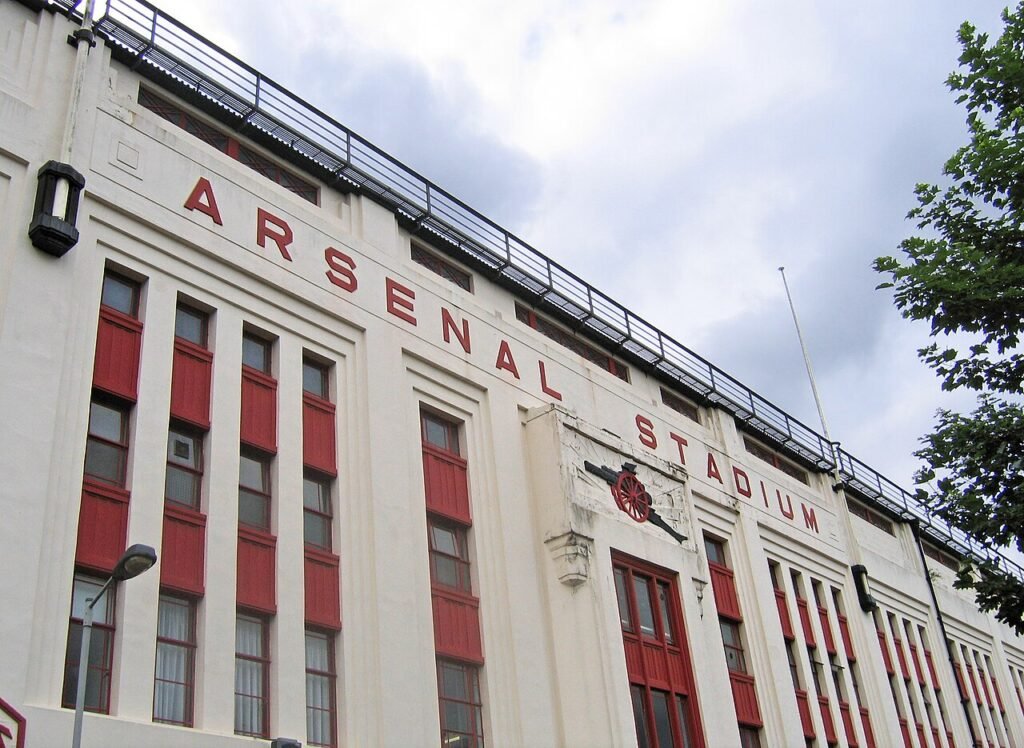
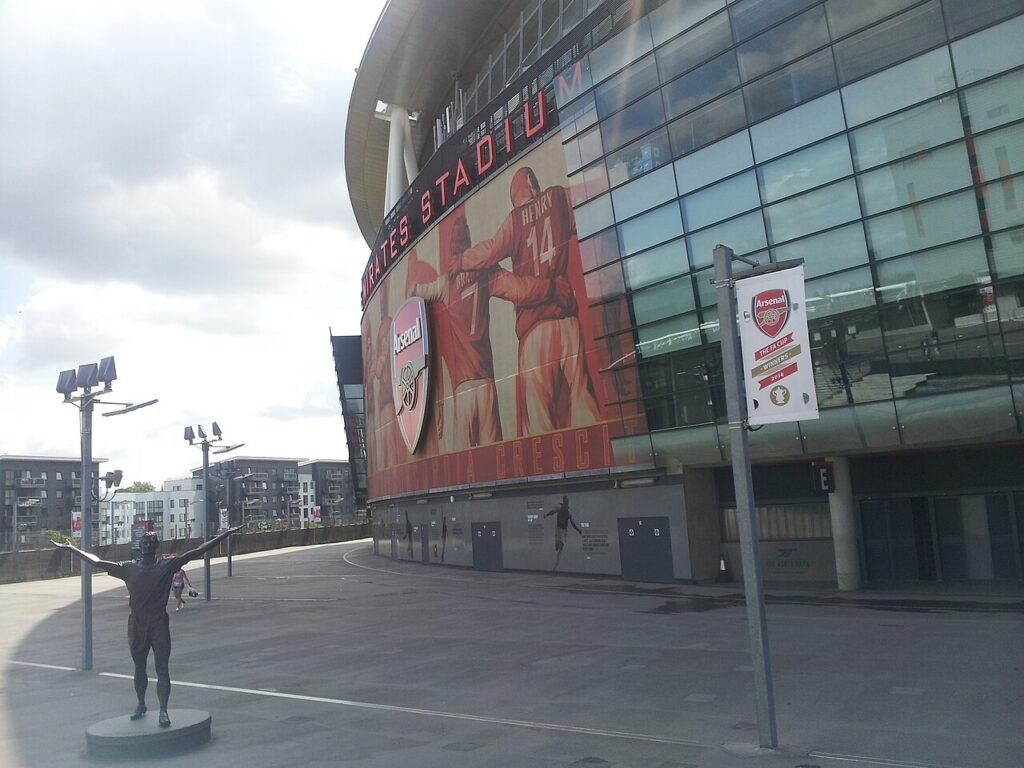
A museum or stadium visit can place the 1971 and 1979 stories within a longer Arsenal timeline. Look for the distinctions between teams, managers and competitions instead of treating every old red shirt as evidence of the same era. If you explore Highbury’s surviving exterior, remember that the former ground now contains homes. Later photographs illustrate the setting but do not reproduce a 1970s crowd or a historical final.
Use our London city guide to combine football heritage with the rest of your weekend. The earlier instalment on Arsenal in the 1930s explains the expectations of success inherited by later generations. The 1970s added another version of greatness: a sustained Double-winning campaign, a difficult process of change and a Wembley finish whose drama still invites supporters to watch it again.