
The Football Trips blog
Arsenal in the 1930s: Chapman, Highbury and the Rise of a Great Club
Explore Arsenal in the 1930s: the teams, turning points and football heritage that shaped the club, with context for a visit to north London.
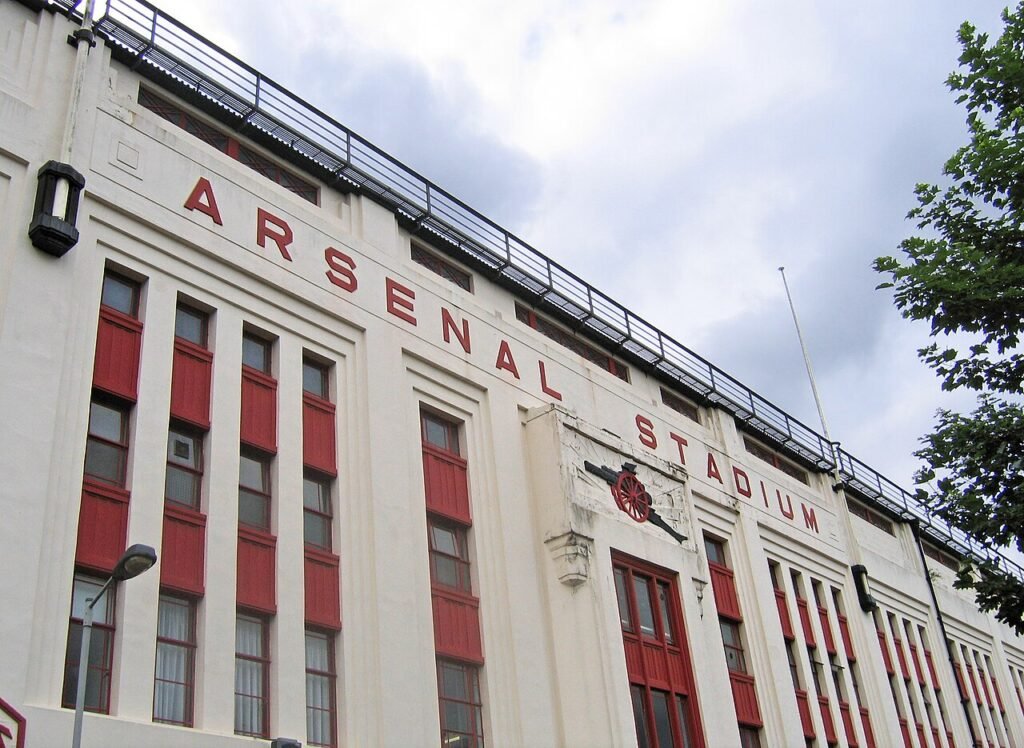
Arsenal’s 1930s changed the scale of the club’s ambitions. A team still seeking its first major trophy at the start of the decade became a repeated champion, associated with an influential manager, recognisable players and an increasingly distinctive home at Highbury. Later Arsenal teams would create their own styles and memories, but the expectation that this was a club capable of setting national standards took powerful shape during these years.
For a visitor to north London, that history is more than a sequence of honours. It helps explain the importance of the old stadium, the continuing commemoration of Herbert Chapman and the relationship between football success and a club’s public identity. Our Arsenal travel guide connects those historical themes with planning a visit today.
A breakthrough at Wembley in 1930
Arsenal won the FA Cup in 1930, defeating Huddersfield Town 2–0 at Wembley. It was the club’s first major trophy and a significant moment for Chapman, who had previously managed the beaten finalists. Alex James and Jack Lambert scored the goals. The result mattered beyond the match itself: it gave a visible reward to the work of constructing a side with greater purpose and confidence.
A cup final offers a clear image of success, but it should not make the preceding work disappear. Players had to be recruited, roles established and a coherent way of playing developed. The trophy is best understood as evidence of that process rather than a magical instant in which everything changed. Arsenal’s subsequent league record would demonstrate that the Wembley victory was more than an isolated afternoon.
The first league title and a new expectation
The First Division championship followed in 1930/31. Another arrived in 1932/33, before further titles in 1933/34, 1934/35 and 1937/38 completed a remarkable sequence across the decade. The honours list is striking because it shows repeated success through changing circumstances. Winning once can establish a memorable team; returning to the top creates a different kind of institutional confidence.
Keep the competition’s historical setting in view. These were Football League First Division titles, not Premier League championships. The later competition did not yet exist, and comparisons across eras require more than placing trophy totals beside one another. The useful point is the consistency Arsenal achieved against their contemporaries. The decade established a standard that later generations would inherit, sometimes as inspiration and sometimes as the pressure of a demanding comparison.
What Chapman represented
Chapman’s reputation involves organisation and the relationship between individual players and a collective system. His Arsenal are closely associated with the W–M formation, but a diagram alone does not explain the achievement. Positions only become meaningful through movement, responsibilities and the qualities of the people carrying them out. A tactical label is a starting point for understanding a team, not a complete account of how it played.
It is also misleading to reduce the decade to one supposedly timeless Arsenal style. The club’s later identities would vary considerably. What connects Chapman’s work with subsequent successful periods is the ability to create a clear footballing structure and persuade players to operate within it. That is an interpretation of the history, rather than a claim that teams separated by generations were tactically identical.
Players who made the system work
Alex James, Cliff Bastin, David Jack and Eddie Hapgood are among the names associated with Arsenal’s rise, while Ted Drake became a major figure as the decade continued. They should not be treated merely as labels attached to a manager’s plan. A successful system depends on players capable of making decisions, contributing different strengths and sustaining performance over a demanding season.
When exploring old photographs or museum material, look beyond the most celebrated face. Team pictures can reveal continuity and change across successive campaigns, while programmes and contemporary reports explain which players were attracting attention at the time. Modern retrospective lists inevitably simplify the story. They are useful introductions, but the achievements belong to a wider group than a short selection of famous names can represent.
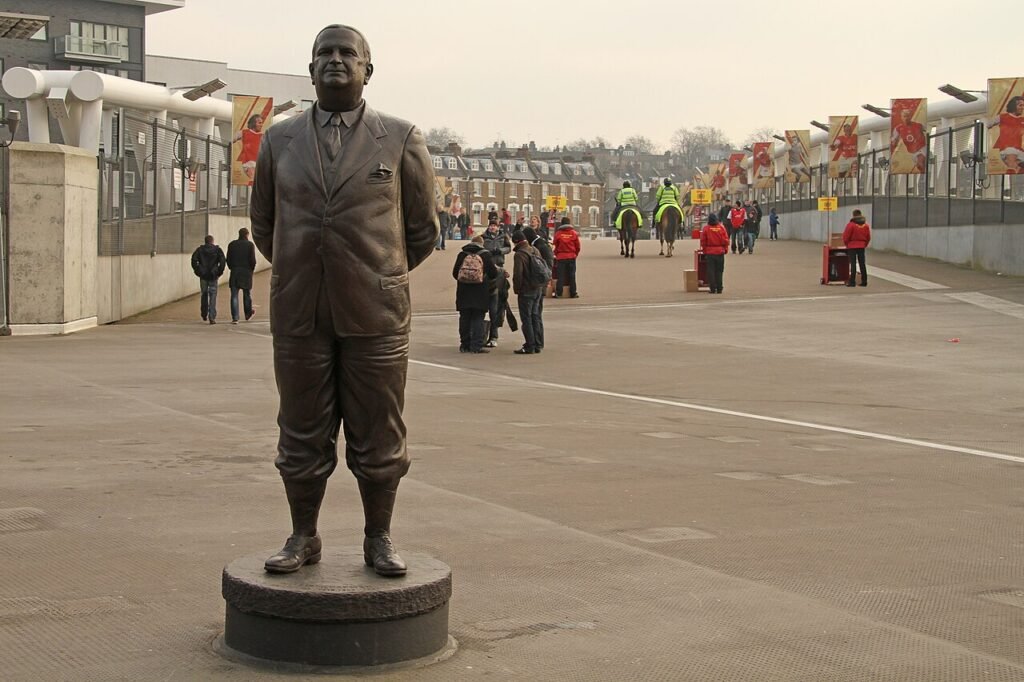
Success continued after Chapman’s death
Chapman died in January 1934, during a title-winning season. Joe Shaw took charge for the remainder of that campaign, and George Allison subsequently became manager. The club continued winning, making the period an important example of continuity through a profound loss. It would be inaccurate to attribute every later achievement directly to decisions Chapman himself made or to erase the work of those who followed.
The distinction matters when a club builds its history around a celebrated individual. Chapman’s influence was substantial, but an institution also needs people capable of maintaining, adapting and renewing what has been established. The championships that followed his death demonstrate that the story involved more than personal inspiration. The groundwork endured because others were able to turn it into continued performance.
Highbury became part of the message
The stadium was central to how supporters experienced the decade. Highbury’s interwar development gave Arsenal a setting that expressed ambition through architecture as well as results. The East Stand façade remains a particularly strong visual link with that identity. It is one reason a journey around the former ground can feel historically meaningful even though Arsenal no longer play there.
A later photograph of the building is not a picture of a 1930s matchday. Changes in use, surrounding streets and the people occupying them all matter. Read image dates and captions carefully, especially when contemporary illustrations accompany historical articles. The surviving architecture can help you imagine scale and setting, but it cannot by itself tell you what a crowd sounded like or reproduce the experience of an earlier generation.
Remembering a dominant decade honestly
For a useful exercise, compare the scale and lettering of the East Stand with the stadium buildings you know from later football. Consider the relationship between the façade and the street rather than looking only for a dramatic photograph. A club building has to address both the people entering it and the neighbourhood outside. Its appearance can communicate permanence, confidence and identity before a visitor has seen a trophy or a pitch. Those qualities help explain why architecture remains such a strong part of Arsenal’s interwar memory, even for supporters whose first match took place generations later.
A second FA Cup in 1936 strengthened the record, alongside the five league championships. Yet a decade of success should not be presented as an uninterrupted sequence of effortless victories. Each competition involved setbacks, selection choices and opponents with ambitions of their own. Looking only at the final honours can make the process appear more inevitable than it was to the people living through it.
The approach of the Second World War also places a boundary around the period. Football’s story did not continue untouched by events outside the ground. The 1930s Arsenal achievement is therefore best considered within its time, rather than as a self-contained sporting world. Club history becomes more convincing when the trophies remain connected to the wider circumstances in which they were won.
Exploring the legacy on a north London visit
Begin with the stadium history available through Arsenal’s official material, then distinguish a current visit to Emirates Stadium from a walk past the former Highbury site. The latter is now residential property: appreciate the surviving exterior from appropriate public areas and respect the people who live there. Check current access and booking arrangements before assuming a museum visit or stadium tour is available on your chosen day.
Our London city guide helps place that north London visit within a manageable weekend. For the capital’s broader background, the history of London offers another perspective on the streets beyond football. The most rewarding way to remember Arsenal’s 1930s is to connect the winning team, the people who sustained it and the physical places through which its legacy is still encountered.