
The Football Trips blog
A History of London: A Traveller’s Guide to the City
Understand London through the turning points, communities and places that shaped it, with historical context you can explore during a city break.
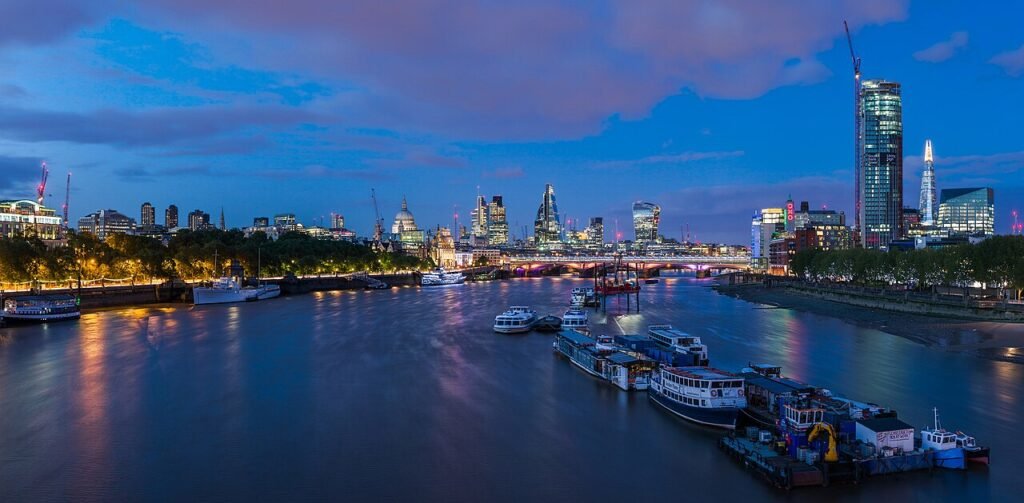
London’s history is easiest to understand as a series of overlapping cities. The Roman trading settlement, the medieval commercial centre, royal Westminster, the imperial port and the expanding railway metropolis did not occupy one neat, unchanging space. Each left a different pattern of streets, buildings and communities. That is why a short walk can move between archaeological remains, a church rebuilt after disaster and a modern office tower without crossing an obvious historical boundary.
This is a traveller’s introduction rather than a complete chronology. It follows a few turning points and suggests how to recognise them on the ground. Use our London destination guide alongside it when planning the practical side of your visit.
Londinium and the importance of the river
The Romans established Londinium around 47–50 CE, according to the London Museum’s chronology. The Thames made the site useful for movement and exchange, while a crossing connected activity on opposite banks. London’s future prominence was not inevitable, but its geography offered an important opportunity. Thinking about the river as transport infrastructure helps explain the settlement more clearly than viewing it only as a scenic backdrop.
Roman London was also vulnerable. Boudica’s rebellion in 60–61 CE brought destruction, followed by rebuilding. Archaeological remains reveal a city that changed repeatedly rather than a single frozen Roman plan. On a visit to the City of London, look for surviving wall fragments and consider a properly interpreted archaeological site such as the Mithraeum. Modern street level can sit well above the ancient city, making a descent below ground a useful change of perspective.
Medieval London had more than one centre
After Roman rule, settlement and political power developed in new ways. Medieval London became a commercial city shaped by merchants, markets, religious institutions and the river. Westminster, farther west, developed its own importance as a royal and governmental centre. The distinction still helps visitors understand why the compact City of London and the area around Parliament feel like separate historical cores within the same capital.
A walk through older lanes is more revealing if you notice their names, changing widths and relationship to churches or trading places. Do not assume the buildings are as old as the street pattern. Fire, rebuilding and redevelopment have altered the fabric many times. What survives can be a route, an institution or a boundary rather than a medieval façade. London’s continuity often lies in how a place is used, not in untouched architecture.
One useful exercise is to compare a map of the City with a map of Westminster before walking either area. Identify the river crossing, the major religious or civic buildings and the streets leading away from them. Then compare those relationships with what you find on foot. The exercise does not require specialist knowledge or a paid tour. It simply encourages you to ask why activity gathered in particular places and how those choices continue to influence the modern capital, even when individual buildings have disappeared.
The Norman castle as a statement of power
William the Conqueror began building the Tower of London in the 1070s. Its position near the river and the eastern side of the City made it more than a royal residence: it was a visible assertion of authority. Historic Royal Palaces traces how the complex developed through successive reigns. The familiar outline seen today represents additions and changing functions, rather than one construction campaign.
When visiting, distinguish the architecture from the stories attached to it. Royal imprisonment and execution attract attention, but the Tower’s history also involves administration, defence and the practical machinery of the state. Its relationship to the surrounding city matters. Seen from the riverside, the fortress helps explain how rulers could watch, protect and intimidate a major commercial centre at the same time.
The Great Fire and the rebuilt City
The Great Fire began in September 1666 and devastated much of the City. The London Museum describes a disaster that displaced around 100,000 people. It destroyed buildings and livelihoods, including the old St Paul’s Cathedral. Recovery was a process of rebuilding homes, businesses and civic confidence, not simply the appearance of a new skyline once the flames stopped.
Christopher Wren’s St Paul’s became a central feature of the rebuilt city. Yet London was not comprehensively remade according to one grand new street plan. Older routes and property patterns continued to influence what emerged. A walk between the Monument and St Paul’s is therefore a useful exercise in reading both change and persistence. The new architecture can be dramatic while the underlying city remains more complicated than a clean historical break.
A global port with difficult connections
The Thames connected London to an expanding commercial world. Docks, warehouses, financial institutions and shipping businesses linked the capital to goods, labour and political power across continents. This prosperity cannot be separated from empire, exploitation and slavery. A responsible account of London should include those relationships rather than presenting maritime growth as an uncomplicated story of enterprise and impressive buildings.
For visitors, the former docklands provide a different setting from royal Westminster. Look at the scale of warehouses and the way water, storage and streets worked together. Museum interpretation can help connect those physical remains to the people and systems behind them. Ask whose work made the trade possible, who benefited and whose experience is absent from the grandest monuments. Those questions make the landscape more understandable, not less enjoyable to explore.
Railways changed the size of London
The Metropolitan Railway opened in 1863, beginning the story of the Underground. Transport for London’s historical material describes the early route between Paddington and Farringdon. Railways helped make a much larger urban region practical, connecting central workplaces with expanding residential areas. They also reshaped how visitors arrived, how people understood distance and which neighbourhoods could grow around stations.
The network is therefore part of the history you experience while travelling, not merely a convenient way to reach it. Station architecture, railway termini and the relationship between neighbourhood centres and transport routes all offer clues. A modern journey compresses distances that would once have felt substantial. Our London holiday itinerary helps turn that large network into a manageable sightseeing plan rather than a reason to cross the city endlessly.
War, rebuilding and the people of the capital
The Blitz brought sustained bombing from September 1940, with homes, workplaces and landmarks damaged or destroyed. Its impact was uneven across the city, and the rebuilding that followed produced new architectural contrasts. The London Museum’s account is a useful reminder that wartime experience involved displacement, work and everyday survival as well as the familiar images of endurance.
London’s later history also belongs to the people who arrived, settled and made lives here. Migration is not a recent addition to an otherwise static city; it is a recurring part of its development. Listen for that history in neighbourhood museums, local archives, food businesses, places of worship and cultural institutions. No single community or building can stand for the whole capital. The city’s identity is continually negotiated through ordinary lives as well as major events.
How to explore the history in a weekend
Choose one historical thread per day. You could begin with Roman and commercial London in the City, spend another day around Westminster and the Tower, then explore the river and former docklands. The route does not need to be chronological to make sense. Comparing different places can show how power, trade, transport and neighbourhood life overlap rather than replacing each other cleanly.
For a wider comparison, our history of Manchester follows another British city shaped by commerce, industry and movement. In London, leave time to look beyond the major monuments: a street alignment, a warehouse entrance or a station can be as revealing as a famous palace. The most useful historical question is often simple. Why is this particular thing here, and what does it tell us about the city around it?